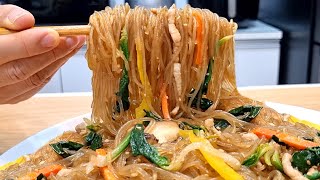
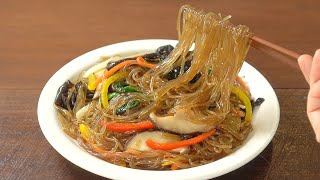
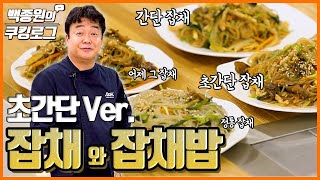
Baek Jong-won's Japchae

Soak glass noodles thoroughly and cook them to the right texture, then mix with separately stir-fried meat and vegetables to create a classic japchae that maintains its chewy texture even when eaten the next day.

Ingredients needed 4 servings

Recipe

Cooking tips

  • Soaking the glass noodles thoroughly in advance reduces cooking time and lowers the risk of failure.
  • Since the cooked noodles are not rinsed with cold water, they must be boiled until fully tender—taste during cooking to ensure they’re soft enough so they don’t become hard after cooling.
  • Removing all moisture from the cooked noodles is essential to prevent the dish from becoming soggy and to maintain its desirable chewy texture.
  • Adding just a small amount of Chinese-style nokdoo (noodle oil) or caramel sauce enhances the visual appeal with a rich, appetizing deep brown color without altering the taste significantly.

Recommended for

  • Those who want to make chewy japchae that stays fresh and doesn't dry out the next day.
  • Those aiming to create a restaurant-style, visually appealing japchae with a rich, deep brown color.
  • Those looking to learn how to preserve the distinct texture and flavor of each ingredient in a traditional, authentic japchae.

Did you cook this?

How did it turn out when you followed this recipe?

Your cooking experience helps everyone find recipes they can trust.

Loading cooking feedback…
  1. School Chef's Japchae40 minNormalMeat & mains
  2. Fabri Japchae30 minNormalMeat & mains
  3. Kim Ho-yoon's Japchae40 minEasyMeat & mains
  4. This Man's Cook Japchae50 minNormalNoodles & bunsik
  5. Kim Dae-seok's Japchae40 minNormalside dish
  6. Seonkyoung Longest Japchae40 minNormalNoodles & bunsik
  7. Maeil Matna Japchae40 minNormalside dish
  8. Baek Jong-won's Super Simple Japchae20 minEasyMeat & mains
  9. This Man's Cook Japchae35 minEasyside dish
  10. Aha Bujang's Japchae30 minEasyNoodles & bunsik