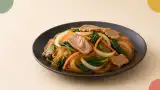
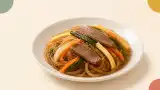
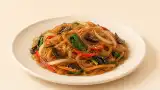
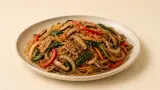
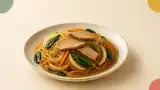
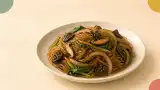
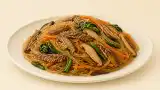
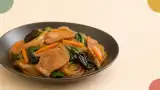
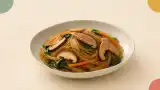
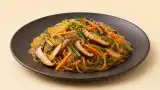
School Chef's Japchae

Easy japchae that doesn't require stir-frying vegetables separately, and the sesame oil coating keeps the noodles from getting soggy over time, maintaining a chewy texture.

🙋 Recommended for

  • Those who want to drastically simplify the tedious japchae cooking process.
  • Those who want to make japchae that stays chewy even after time.

Ingredients needed 🛒4 servings

  • 200g glass noodles
  • 2 sheets square fish cake
  • 1/2 carrot
  • mushrooms (as needed)
  • 150g beef (for japchae)
  • 2 tbsp sesame oil
  • 1.5 tbsp sugar
  • 4 tbsp soy sauce
  • a pinch of pepper
  • 1 tbsp mirin
  • 1 tsp minced garlic

Recipe 🍳

  1. Julienne the fish cake, carrot, mushrooms, and other japchae toppings into thin strips of uniform thickness.
  2. Boil the glass noodles in boiling water for 8 to 10 minutes until soft and chewy.
  3. Drain the boiled noodles, then toss with sesame oil and a little sugar to coat evenly, preventing them from sticking.
  4. Season the beef for japchae by mixing with soy sauce, pepper, mirin, sesame oil, sugar, and minced garlic; massage to combine.
  5. Heat a pan and stir-fry the seasoned beef first, using chopsticks to break it apart so it doesn't clump.
  6. Add the julienned fish cake, carrot, and mushrooms to the pan all at once, and stir-fry together until the vegetables are cooked through.
  7. Combine the prepared noodles with the stir-fried beef and vegetables, mixing well so the seasoning is evenly distributed.
  1. Julienne the fish cake and vegetables thinly.
  2. Boil the glass noodles for 8-10 minutes, then coat with sesame oil and sugar.
  3. Season the beef with soy sauce, pepper, garlic, etc.
  4. Stir-fry the beef in a pan, then add the fish cake and vegetables and stir-fry together.
  5. Mix the noodles with the stir-fried ingredients to finish.

Cooking tips 💡

  • Tossing the boiled glass noodles with sesame oil first prevents them from becoming soggy or sticking together even after time.
  • Instead of stir-frying each vegetable separately, cooking them together with the meat simplifies the process significantly.
YouTube

Baek Jong-won's Japchae

A classic japchae made by sufficiently soaking dangmyeon (sweet potato noodles), cooking each meat and vegetable separately, and mixing them together so the chewy texture stays intact even the next day.

40minNormalMeat & mains
glass noodlesporkspinachonioncarrot
home mealholiday food
YouTube

Striker Chef's Spicy Yellow Corvina Japchae

A unique japchae where savory, pan-fried yellow corvina flakes are placed on top of glass noodles tossed in a sweet and spicy gochujang sauce.

30minNormalMeat & mains
Glass NoodlesYellow CorvinaCarrotScallionOnion
Spicy JapchaeHoliday FoodUnique Dish
YouTube

Striker Chef Scallion Japchae

A non-soggy scallion japchae made with plenty of scallions instead of spinach, enhancing its fragrant aroma and crisp texture.

30minNormalMeat & mains
Glass noodlesPork neckScallionsEnoki mushroomOnion
Holiday foodEasyUnusual dish
YouTube

Baek Jong-won's Super Easy Japchae

A time-saving variation japchae made by cooking all ingredients in one pan without frying meat and vegetables separately, or blanching all ingredients in one pot and then mixing to dramatically reduce cooking time.

20minEasyMeat & mains
glass noodlesporkonioncarrotspinach
super easyholiday food
YouTube

Ttukdak Hyung's One-Pan Japchae

A super simple japchae recipe where you add meat, vegetables, and glass noodles sequentially in one frying pan without the hassle of stir-frying ingredients separately, using cola to achieve a delicious, non-soggy brown color.

20minVery easyside dish
Glass noodlesOnionShiitake mushroomsCarrotSpinach
One-pan mealHome cookingHoliday food
YouTube

Ttukdak Hyung's Leftover Galbi Sauce Japchae

Instead of making a separate sauce, use leftover galbi sauce to braise meat, vegetables, and dangmyeon all at once, completing a holiday japchae at lightning speed.

40minEasyNoodles & bunsik
dangmyeoncooking oilporkcarrotshiitake mushrooms
Holiday foodOne-pan dishSuper simple