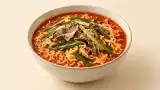
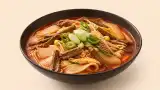
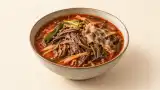
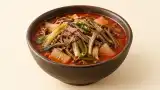
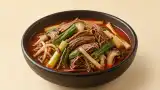
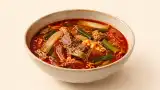
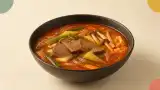
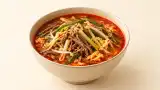
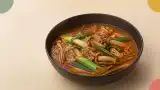
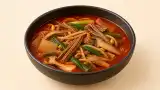
Okjubu's Beef Short Rib Yukegjang
A rich, spicy beef short rib stew with deep flavor developed from a fragrant gochujang oil made using savory beef suet fat
🙋 Recommended for
- ⭐ Those who want a hearty, deep broth taste at home like a professional restaurant's clay pot yukegjang
- ⭐ Those looking to enjoy a generous, nourishing meal with abundant beef short rib and vegetables
beef short ribgreen oniondried fernbrakebean sproutsbeef suet fatgochugarusoy saucegarlicgingersquid saucebeef dashi
Ingredients needed 🛒3 servings
- beef short rib 200g
- green onion 2 stalks
- blanched dried fernbrake handful
- bean sprouts two handfuls
- beef suet fat 3 tablespoons
- gochugaru 4 tablespoons
- soy sauce 3 tablespoons
- minced garlic 2 tablespoons
- minced ginger a little
- squid sauce 2 tablespoons
- beef dashi 1 tablespoon
- water 1.5L
Recipe 🍳
- In a pot, add 3 tablespoons of beef suet fat and 4 tablespoons of gochugaru over low heat, stirring gently until the gochujang oil forms without burning.
- Once the aroma of the gochujang oil rises, add 3 tablespoons of soy sauce, 2 tablespoons of minced garlic, a little minced ginger, and 2 tablespoons of squid sauce to create the seasoning base.
- Add large slices of green onion, dried fernbrake, and beef short rib generously, and stir-fry thoroughly with the gochujang oil.
- Once all ingredients are well combined, pour in 1.5L of water and add 1 tablespoon of beef dashi, then simmer slowly until the broth becomes rich and deep.
- Finally, add plenty of clean bean sprouts and cook gently until they just lose their rawness, then serve.
- Fry beef suet fat and gochugaru over low heat to make gochujang oil.
- Mix soy sauce, garlic, ginger, and squid sauce to prepare the yukegjang seasoning.
- Add green onion, dried fernbrake, and beef short rib to the gochujang oil and stir-fry.
- Pour in water and adjust seasoning with beef dashi, then simmer deeply.
- Add bean sprouts at the end and lightly boil to finish.
Cooking tips 💡
- Using beef suet fat (also known as suet) brings back the rich, savory depth and umami missing when regular oil is used.
- When making gochujang oil, keep the heat at medium-low—high heat will cause bitterness.