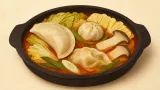
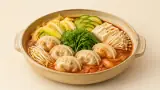
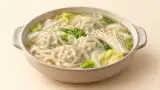
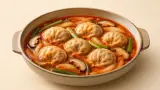
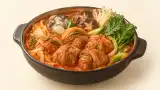
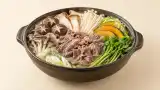
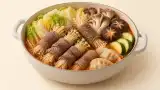
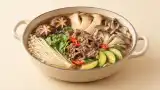
Okjubu's Mushroom Dumpling Jjigae
A warm and hearty stew made with a variety of mushrooms, dumplings, and beef, simmered to rich and deep flavor.
🙋 Recommended for
- ⭐ Those craving a warm, filling soup on cold days
- ⭐ People wanting to enjoy a variety of vegetables and mushrooms in one healthy meal
Shiitake mushroomEnoki mushroomOyster mushroomPleurotus mushroomWood ear mushroomNapa cabbageChinese cabbageGreen onionRed pepperGreen chiliDumplingsBeef (shabu-shabu cut)Dried anchovy stockSoy sauce baseBeef dashi
Ingredients needed 🛒3 servings
- Shiitake mushroom 2 pieces
- Enoki mushroom 1 piece
- Oyster mushroom 1 handful
- Pleurotus mushroom 1 pack
- Wood ear mushroom a little
- Napa cabbage 4 slices
- Chinese cabbage 2 heads
- Green onion 1 stalk
- Red pepper 1 piece
- Green chili 1 piece
- Dumplings 4–6 pieces
- Beef (shabu-shabu cut) 150g
- Dried anchovy stock 800ml
- Soy sauce base 3 tablespoons
- Beef dashi 0.5 tablespoon
Recipe 🍳
- Cut shiitake mushroom, enoki mushroom, napa cabbage, green onion, and peppers into bite-sized pieces. Tear oyster mushrooms and pleurotus mushrooms into strands.
- Soak wood ear mushrooms in water and tear them apart. Trim the stems of Chinese cabbage and wash thoroughly.
- Pour 800ml dried anchovy stock into the stew pot. Add soy sauce base and beef dashi to adjust the broth flavor.
- Once the broth comes to a boil, add dumplings first. Arrange the prepared mushrooms, napa cabbage, Chinese cabbage, green onion, peppers, and beef around the pot. Simmer for a few minutes more.
- Reduce heat once the beef and vegetables are cooked to your liking, and enjoy while hot.
- Prepare mushrooms and vegetables by cutting them into bite-sized pieces.
- Pour dried anchovy stock into the pot and season with soy sauce base and dashi.
- Once boiling, add dumplings, mushrooms, vegetables, and beef all at once and simmer.
- When ingredients are perfectly cooked, the stew is ready.
Cooking tips 💡
- For a richer, heartier broth, substitute dried anchovy stock with beef bone stock.
- Eat the solids first, then use the remaining broth to serve kalguksu noodles or make rice porridge—delicious as a side.