Jung Ho-young's Kombu-Flavored Rolled Omelette
A traditional Japanese-style rolled omelette with rich umami flavor, enhanced with kombu broth, shochu, and mirin for a supremely moist and tender texture.
Ingredients needed 3 servings
Recipe
Cooking tips
- Avoid pouring oil directly onto the pan—this makes the omelette greasy. Always apply oil thinly and evenly using a kitchen towel for a clean, attractive grain.
- Beginners should use a smaller, rectangular frying pan instead of a large one—it’s much easier to handle.
- If the egg mixture is overcooked, it becomes dry and won’t stick together properly. Roll it quickly when the top is still slightly wobbly and runny for a moist, tender texture.
Recommended for
- Those who want to recreate the soft, sweet, and juicy rolled omelette typically served at Japanese restaurants at home.
- People seeking a more refined texture and deeper umami flavor compared to regular rolled omelettes.
Did you cook this?
How did it turn out when you followed this recipe?
Your cooking experience helps everyone find recipes they can trust.
Loading cooking feedback…
You might also like
- Shin Dong-min's Japanese-Style Egg Roll with Kombu

- Kim Dae-seok's Kombu Soy-Marinated Eggs

- Ttukdak Hyung's Kelp Butter Soy Sauce Egg Rice

- School Chef's Yachae Gyeran Mari

- This Man's Cook Tuna Perilla Egg Roll
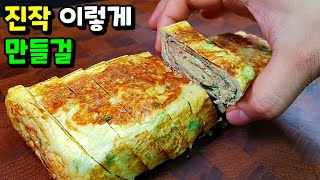
- This Man's Cook Egg Roll

- Jung Ho-gyun's Nostalgic Seaweed Rolled Omelet

- Seungwoo Dad's Spam String Cheese Egg Roll
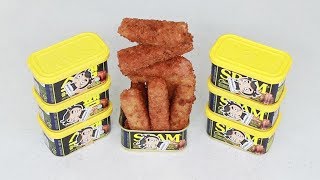
- Kim Dae-seok's Aged Kimchi Rolled Omelet

- Striker Chef's Scallion and Mentaiko Rolled Omelet with Pickled Radish Salad
