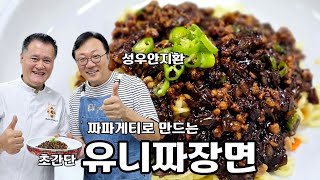
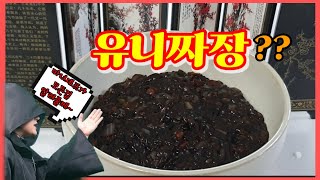
Yeo Kyung-ok's Uni-Jjajang
Sautéed minced meat and finely chopped vegetables with jjajang sauce, creating a smooth and richly flavored uni-jjajang.
🙋 Recommended for
- ⭐ Those seeking a softer texture than regular jjajangmyeon, ideal for children or elderly eaters.
- ⭐ Those who want to enjoy a hearty jjajang-bap by mixing the remaining sauce with rice after finishing the noodles.
minced porkonionzucchinigreen oniongarlicgingerjjajang saucerice winesoy sauceoyster saucesesame oilcucumber
Ingredients needed 🛒1 servings
- 1 serving Chinese noodles
- 80g minced pork
- 1 onion
- 1/4 zucchini
- 1/2 green onion
- 3 garlic cloves
- a small amount of ginger
- 1 tablespoon jjajang sauce
- 3 tablespoons oil
- 1 tablespoon rice wine
- 1/2 tablespoon soy sauce
- 1/2 tablespoon sugar
- 1/2 tablespoon oyster sauce
- 2 tablespoons starch slurry
- a small amount of sesame oil
- a small amount of cucumber garnish
Recipe 🍳
- Dice the onion and zucchini into pieces smaller than 0.5 cm to match the size of the minced pork.
- Finely chop the green onion, garlic, and ginger and set aside.
- Heat 3 tablespoons of oil in a pan and add the minced pork, sautéing until browned.
- Once the pork is cooked, add 1 tablespoon of jjajang sauce and stir-fry together with the meat and sauce until well blended.
- Add 1 tablespoon of rice wine and 1/2 tablespoon of soy sauce, then mix in the finely chopped green onion, garlic, and ginger to enhance the aroma.
- Add the diced onion and zucchini and continue cooking over high heat until the onion is fully softened.
- Season with 1/2 tablespoon of sugar and 1/2 tablespoon of oyster sauce. As moisture releases from the vegetables, gradually add the starch slurry to thicken the sauce, then finish with a drizzle of sesame oil.
- Warm up boiled noodles rinsed under cold water, place them in a bowl, pour generous amounts of uni-jjajang sauce over, and top with sliced cucumber to serve.
- Finely chop the onion, zucchini, and aromatic vegetables.
- Heat plenty of oil in a pan and sauté the minced pork and jjajang sauce together.
- Add rice wine, soy sauce, and the chopped vegetables, then cook through. Season with sugar and oyster sauce.
- Adjust the consistency with starch slurry, finish with sesame oil, and serve over boiled noodles with garnish.
Cooking tips 💡
- No need to fry the jjajang sauce separately—simply add it to the pork while cooking for easier preparation at home.
- Jjajang sauce may appear light when first cooked, but as it simmers longer, moisture evaporates and the sauce deeply penetrates the ingredients, developing its signature rich dark color.
- Since all ingredients are finely chopped, the leftover sauce after eating the noodles is perfect for mixing with rice to enjoy as jjajang-bap.