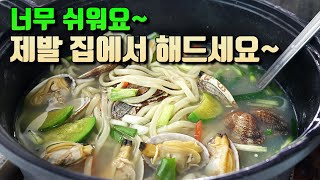
Okjubu's Shrimp Kalguksu
A refreshing kalguksu with plump, neatly cleaned whole shrimp added to a richly brewed anchovy broth, enhancing both coolness and savory depth.
🙋 Recommended for
- ⭐ Those who want a refreshing, deeply flavorful warm soup
- ⭐ Home cooks looking to make delicious noodle dishes quickly using simple secret ingredients
kalguksu noodlesshrimpgreen onionanchovy stock tea baganchovy dashimonosodium glutamatefish saucegarlic
Ingredients needed 🛒2 servings
- kalguksu noodles 2 servings
- shrimp 6 or more (3 per serving)
- green onion 1 stalk
- anchovy stock tea bag 1
- anchovy dashi 1 tablespoon full
- pepper a pinch
- monosodium glutamate 2 pinches
- fish sauce as needed
- seasoned garlic 1 tablespoon
- salt a pinch
Recipe 🍳
- Bring water to a boil in a pot, add the anchovy stock tea bag, and simmer to extract the broth. Remove and discard the tea bag.
- Chop the green onion into large pieces and add to the pot. Add 1 tablespoon of anchovy dashi, a pinch of pepper, and 2 pinches of monosodium glutamate to season the base broth.
- Peel the shrimp by hooking your thumb under the back shell and pulling off the legs cleanly, ensuring no meat breaks. Add all the peeled shrimp to the boiling broth.
- Add fish sauce and 1 tablespoon of seasoned garlic. Taste the broth and adjust seasoning with salt if needed.
- Once the broth is vigorously boiling, add the kalguksu noodles and stir well to prevent sticking. Cook for about 6 minutes, stirring occasionally, until fully cooked.
- Boil anchovy stock using the tea bag, remove the bag, then add green onion, dashi, pepper, and monosodium glutamate.
- Add peeled shrimp, then adjust seasoning with fish sauce, seasoned garlic, and salt.
- Add kalguksu noodles and cook for 6 minutes, stirring frequently to prevent clumping.
Cooking tips 💡
- When peeling shrimp, use your fingernail to lift the back shell, then sweep downward along the leg direction to remove the shell cleanly without breaking the meat.
- After adding the noodles, stir thoroughly at first to prevent them from sticking to the bottom of the pot.